Saturday, December 10, 2011

The End

Monday was our final science lesson.  The students did one last test on their minerals, luster. Our Geologists were definitely in the swing of things by week 7. They did awesome jobs conducting the luster test using the penlights.  The students were using geology terminology when they were examining the minerals’ luster.  They completed all but one category in their mineral field guides. They will be able to conduct the last test with their classroom teacher.
                            

For the past six weeks we have been working with the same students, and so I have witnessed different ways students work and learn.  Most of the students clearly understand the directions and get right to work. Some of the students need to have the directions explained to them more than once before they start working. These students are usually the same ones who need to be reminded to focus on their task. I also witnessed a few students who did not seem to be paying attention to the directions at all. These students would not do any work unless an adult was working with them.  This class also had 6 students with IEPs. It’s a good thing that there were 4 adults in the room, otherwise I don’t think Sarah and I would have been able to give these students the attention they needed to complete their assignments.


Our final assignment for the students was a quiz. We made up a 10 question cloze activity based on the rocks and minerals information we presented to the studetnts. We included a word list to help the students.  It was interesting to witness the students taking the quiz. Some students completed it pretty quickly, about 10 minutes, and some students took about 25 minutes to finish.  Again some students were not able to work on the quiz without the help of an adult.  I didn’t get to review all of the quizzes but I saw some really good papers with lots of correct answers.  I was glad to see that the students remembered the information from the beginning lessons. I think Sarah and I did a good job of teaching the students about rocks and minerals. I think the students did a job of teaching me and Sarah what being a teacher is all about. This classroom has students of different abilities and this definitely helped us to remember that all students do not learn the same way and that it is important for us to present information in different ways to accommodate the students’ different learning styles.


Friday, December 2, 2011

In the Home Stretch

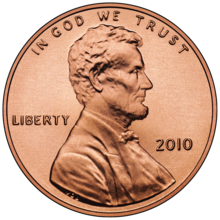
I bet you didn’t know there was a scale to measure the hardness of minerals; it’s called the Mohs scale.  This week our budding Geologists performed tests on the minerals to determine their hardness.  The mother in me was a little nervous about this. The students were going to be using sharp nails and pennies to scratch the minerals and rate their hardness. I was concerned that students might try to scratch each other with the nails or just hurt themselves when using them. I was also concerned about pennies going in mouths, but then again I am the mother of a 4 yr. old.  Sarah and I made it a point to go over our safety rules and address the proper and safe use of the nails and pennies.


Agai       We broke the class up into 4 groups and had them work with 6 minerals at a time.  This part of the lesson flowed very smoothly since there weren’t any station changes and they were only doing one test.  We addressed the engineering and technology connection, which is, to identify materials used to accomplish a design task based on a specific property, e.g., strength, hardness, and flexibility; by having the students use nails to test for hardness. 
                                                            

We needed to address the technology connection and have the students do a writing assignment, so to accomplish both of the tasks we showed the class a PowerPoint on what a Geologist does. We didn’t want them to think the only job a Geologist had was to identify rocks and minerals.  After they watched and listened to the PowerPoint we asked them to write a paragraph about a day in the life of a Geologist or some aspect of a Geologist’s job. It was interesting to see the work of the students. Some students were really excited about the work a Geologist does and quickly wrote a paragraph about it. Some students needed more prompting and help with ideas. At the end we had lots of students who wanted to share what they wrote. 
                     
I thinI think we had another successful lesson and next week the students will be finishing their field guides.  They have two tests left. It will also be our last lesson. This has been a great learning experience for me and I hope the students have learned a lot about rocks and minerals from us.


Saturday, November 26, 2011

Magnetism and Streak

Mineral testing continues. This week we tested for magnetism and streak. Streak is the identifiable color of a mineral in its powder form.  The students are well on their way to completing their minerals field guides.  I think we have improved our classroom management by reorganizing the way the testing is done and breaking the minerals into groups of 6. It was less chaotic having the students look at 2 sets of 6 minerals than to have them work with one set of 12 minerals. We also used this lesson to give students some time to catch up on anything they were missing from their field guides. 


As far as instructional technology goes we showed the students a website, www.rockhounds.com, which has a professional field guide on it. In hindsight this website was not the most child friendly but it did have lots of useful information about minerals on it. We did suggest that the students could view this site with the help of an adult. 


For the writing portion of the class we had the students pick a mineral and write clues about it on index cards. Then they read the clues to a classmate and challenged him to guess which mineral it is. The students wrote excellent clues and they enjoyed trying to stump each other with their descriptions.  This wasn’t exactly what the writing portion should have been so we are going to be addressing it again in the next lesson.
                                                   

We are almost finished with our field guides and our lessons. I’m looking forward to seeing the finished products of our hard-working Geologists!!

Saturday, November 19, 2011

Let's Examine Minerals

We started today’s lesson by addressing one major misconception about rocks and minerals; that they are the same. We tend to use the terms rocks and minerals interchangeably and this is not accurate. So we explained that rocks are made up of two or more minerals and that minerals are naturally existing chemical compounds.  The students understood the difference because they remembered seeing that the rocks were made up of more than one mineral during our rocks lesson. 
                      
Conglomerate rock                                                 feldspar mineral


There was a lot of new vocabulary in this lesson.  We watched a Brainpop about Identifying Minerals. The students were given a handout with vocabulary words to listen for during the video. The students were paying attention and seemed to be interested in the video. After the video we asked the students if they were able to define the words based on what they heard and saw in the video.  This exercise was somewhat successful. We went over the definitions of the words on the list before we moved on the next part of the lesson.

                                                             
We started examining minerals during this week’s science class. We set up our class in 3 stations, prior to start of the lesson, where the students were to observe and record the minerals’ shape, smell, and feel.   They could also draw the mineral. We had the students rotate among the 3 stations in groups of 8 so that there weren’t too many students at one station.  Once the students got the hang of it I think it worked out pretty well.  The students were set up in color coded groups to help them move around the room in an orderly manner.  The students were a little overwhelmed observing 12 minerals and having 12 pieces of paper to manipulate. They were concerned about having enough time to accomplish all that we asked them to do. We did tell them not to worry about getting everything done today since we are going to be working with minerals for the next few weeks.  For next week’s lesson we are going to modify the stations so that the students have more time to get their work done.


Thursday, November 10, 2011

Introducing....Minerals!!

I definitely felt like I had been on a “science vacation” when I returned to my 4th grade class on Monday. Just as I had somewhat forgotten what we were discussing about rocks 2 weeks earlier, I am sure the students did also. Of course as the teacher I reviewed my notes and brought myself up to speed. 
snow-easton-mitchell

The students were excited to see the culmination of the crayon rock project we were working on during the previous lesson. Sarah did a great job preparing the samples and I think the students appreciated the tactile props.


We started discussing minerals and the differences between them and rocks.  This can be confusing for the students.  They knew that there were differences but it was not necessarily easy for them to verbalize it. After some examination and some prompting from their teachers the students engaged in a lively discussion about the attributes of minerals and what makes them different from rocks.
   
Classroom management can be tricky when you have 25 students spread across the room. It is important that we are circulating during our lesson to make sure that all of the students are staying focused on their observations and recordings.  We also listen to the discussions the students are having and encourage them to use their scientific vocabulary.  Some students need to be reminded of the safety rules and to stay on task. It’s important for the teachers to always be aware of what is going on in the classroom so that we can enhance learning and provide the optimal environment for the students.

Monday, October 24, 2011

Igneous, Sedimentary, and Metamorphic

Last week we examined 3 rocks and this week we expanded to 12: 3 igneous, 3 sedimentary and 3 metamorphic.  The students seemed to enjoy having a variety of rocks to examine and had plenty of adjectives to describe them.  Our lesson introduction consisted of a brief recap of some key points from last week’s lesson.  Of course we reviewed safety and added some new rules since the students were going to be working with a plastic knife. So we told them not to stab each other, ha-ha!! But seriously, we made sure to give explicit instructions regarding the use of the plastic knives and we watched the students carefully.
GneissConglomerate                                                                                  

Our materials management was a little tricky. We have to share our supplies with Mike and there is only one set so there is just about enough to go around for the two classes.  Since we were working with 12 rocks divided into 3 groups, the students were given one group to examine at a time.  Sarah and I organized the trays and the rocks before class. We also handed out the supplies and changed the rocks out when it was time.  We decided that it would be faster and less chaotic for us to do it instead of having the students get up and down to get their supplies.

Rock Kit


We were closely connected to the frameworks so that we are teaching in tandem with what the classroom teacher is teaching the rest of the time.  Our lesson today was more fun than last week. I think we were less nervous and knew what we were in for.  Of course I have to mention Sarah’s super organization skills and creativity. I think we make a good team and I am looking forward to our future lessons. 

Thursday, October 20, 2011

Rocks and Minerals Take 1!

I think Sarah and I had a good experience teaching rocks and minerals to one of the 4th grades at South Row.  We did a lot of planning and I feel that we were very organized in the way we presented the lesson and carried it out. We stayed connected to the frameworks and tried to deliver the lesson in a way that students could make connections to the topic. They did seem to be interested in the lesson and in the examination of the rocks.  We did well on time. We accomplished our goal but we could have spoken more if we needed to.

     We went over many safety rules and asked the class to contribute their own. We were really concerned about the students putting rocks into their mouths but luckily that did not happen.  When the students were feeling the rocks for texture I noticed one pair trying to scratch each other on the arms with the rocks. I told them that it was better to feel the rocks with their fingers. This seemed to work. We also stressed the importance of using the hand lenses properly. We mentioned not putting them up to their eyes because it was unsafe and could do damage to their eyes.  They didn’t inappropriately play around with the hand lenses. We also told the students not to try to scratch the hand lenses with the rocks.
     I was happy to be working with Sarah since I am new to the program and she has more experience than I do. There are 25 students in the class and I can’t even imagine teaching this lesson alone. It’s nice to have another person there to lean on and who can help out.  We broke the lesson up so that we took turns speaking and writing and walking around the room observing the students.  Overall I think it was a great first experience and I am looking forward to learning about some more rocks next week.