Saturday, November 26, 2011

Magnetism and Streak

Mineral testing continues. This week we tested for magnetism and streak. Streak is the identifiable color of a mineral in its powder form.  The students are well on their way to completing their minerals field guides.  I think we have improved our classroom management by reorganizing the way the testing is done and breaking the minerals into groups of 6. It was less chaotic having the students look at 2 sets of 6 minerals than to have them work with one set of 12 minerals. We also used this lesson to give students some time to catch up on anything they were missing from their field guides. 


As far as instructional technology goes we showed the students a website, www.rockhounds.com, which has a professional field guide on it. In hindsight this website was not the most child friendly but it did have lots of useful information about minerals on it. We did suggest that the students could view this site with the help of an adult. 


For the writing portion of the class we had the students pick a mineral and write clues about it on index cards. Then they read the clues to a classmate and challenged him to guess which mineral it is. The students wrote excellent clues and they enjoyed trying to stump each other with their descriptions.  This wasn’t exactly what the writing portion should have been so we are going to be addressing it again in the next lesson.
                                                   

We are almost finished with our field guides and our lessons. I’m looking forward to seeing the finished products of our hard-working Geologists!!

Saturday, November 19, 2011

Let's Examine Minerals

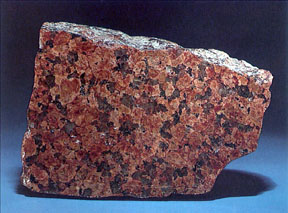
We started today’s lesson by addressing one major misconception about rocks and minerals; that they are the same. We tend to use the terms rocks and minerals interchangeably and this is not accurate. So we explained that rocks are made up of two or more minerals and that minerals are naturally existing chemical compounds.  The students understood the difference because they remembered seeing that the rocks were made up of more than one mineral during our rocks lesson. 
                      
Conglomerate rock                                                 feldspar mineral


There was a lot of new vocabulary in this lesson.  We watched a Brainpop about Identifying Minerals. The students were given a handout with vocabulary words to listen for during the video. The students were paying attention and seemed to be interested in the video. After the video we asked the students if they were able to define the words based on what they heard and saw in the video.  This exercise was somewhat successful. We went over the definitions of the words on the list before we moved on the next part of the lesson.

                                                             
We started examining minerals during this week’s science class. We set up our class in 3 stations, prior to start of the lesson, where the students were to observe and record the minerals’ shape, smell, and feel.   They could also draw the mineral. We had the students rotate among the 3 stations in groups of 8 so that there weren’t too many students at one station.  Once the students got the hang of it I think it worked out pretty well.  The students were set up in color coded groups to help them move around the room in an orderly manner.  The students were a little overwhelmed observing 12 minerals and having 12 pieces of paper to manipulate. They were concerned about having enough time to accomplish all that we asked them to do. We did tell them not to worry about getting everything done today since we are going to be working with minerals for the next few weeks.  For next week’s lesson we are going to modify the stations so that the students have more time to get their work done.


Thursday, November 10, 2011

Introducing....Minerals!!

I definitely felt like I had been on a “science vacation” when I returned to my 4th grade class on Monday. Just as I had somewhat forgotten what we were discussing about rocks 2 weeks earlier, I am sure the students did also. Of course as the teacher I reviewed my notes and brought myself up to speed. 
snow-easton-mitchell

The students were excited to see the culmination of the crayon rock project we were working on during the previous lesson. Sarah did a great job preparing the samples and I think the students appreciated the tactile props.


We started discussing minerals and the differences between them and rocks.  This can be confusing for the students.  They knew that there were differences but it was not necessarily easy for them to verbalize it. After some examination and some prompting from their teachers the students engaged in a lively discussion about the attributes of minerals and what makes them different from rocks.
   
Classroom management can be tricky when you have 25 students spread across the room. It is important that we are circulating during our lesson to make sure that all of the students are staying focused on their observations and recordings.  We also listen to the discussions the students are having and encourage them to use their scientific vocabulary.  Some students need to be reminded of the safety rules and to stay on task. It’s important for the teachers to always be aware of what is going on in the classroom so that we can enhance learning and provide the optimal environment for the students.